
Table of Contents
Understanding Water Damage Challenges in Seattle
Seattle’s coastal climate brings frequent heavy rainfall and seasonal storms, making water damage a common threat to homes and businesses. From burst pipes due to aging infrastructure to sudden flooding, these issues can weaken structures and foster mold growth within 24-48 hours. We understand the stress this causes for homeowners, and Water Damage Restoration in Seattle demands immediate attention to safeguard your property.
According to FEMA guidelines, avoid cleaning or repairs until professionals assess the damage to ensure safety and prevent further issues. Our rapid response teams provide 24/7 availability, arriving in 1-2 hours for water extraction and structural drying as part of water damage restoration Seattle. This mitigation process halts secondary damage like mold, outlining steps from initial assessment to complete drying.
Quick action through local flood cleanup processes minimizes costs, with insurance often covering flood damage restoration in Seattle and mold remediation in Seattle. Upcoming sections explore prevention strategies and our comprehensive Seattle water recovery services for reliable results. Consult a licensed professional for a site inspection; results may vary.
Seattle’s Water Damage Landscape
Seattle’s proximity to the Puget Sound exposes properties to substantial water damage risks, with annual rainfall exceeding 37 inches contributing to frequent flooding and moisture issues. We’ve observed how this wet climate affects both residential and commercial buildings, leading to common problems like basement inundation and wall saturation. In flood-prone zones such as the Lake Union area, urban flooding from heavy downpours and poor drainage exacerbates structural vulnerabilities, particularly in older neighborhoods with aging infrastructure.
Water Damage Restoration in Seattle demands attention to these local patterns, where relentless precipitation influences the scope of damage and restoration needs. We also provide flood damage restoration Seattle services tailored to these neighborhood-specific risks. Common scenarios include sewage backups in high-rises and coastal surges along the waterfront, often requiring adherence to local regulations for safe cleanup and disposal of contaminated water. For instance, prompt action prevents secondary issues like mold growth, aligning with EPA guidelines on flood cleanup to maintain indoor air quality.
Seattle’s diverse topography–from steep hills in Queen Anne to low-lying waterfronts in Ballard–creates varied water damage risks across neighborhoods, shaping the urgency and methods of response. The following table compares prevalence, causes, and initial priorities in key areas, drawing from local climate reports and restoration case studies.
| Neighborhood | Common Causes | Prevalence (Seasonal) | Initial Response Priority |
|---|---|---|---|
| Downtown/Urban Core | Burst pipes in high-rises, sewage backups | High (Year-round) | Immediate professional assessment due to dense population |
| Waterfront/Ballard | Flooding from storms, coastal surges | Peak in winter | Evacuation and water removal first |
| Suburban Eastside | Appliance leaks, basement flooding | Moderate year-round | DIY initial steps with pro follow-up |
Tailoring flood damage restoration to specific locations enhances effectiveness, as EPA resources emphasize ventilation and dehumidification to mitigate mold risks post-flood. In urban cores, our rapid response prioritizes extraction to safeguard occupants, while suburban areas benefit from preventive measures like sump pumps. This location-specific approach ensures reliable results and minimizes long-term damage.
Visualizing these risks helps homeowners anticipate challenges in their area. For example, winter peaks in waterfront zones highlight the need for swift water mitigation.
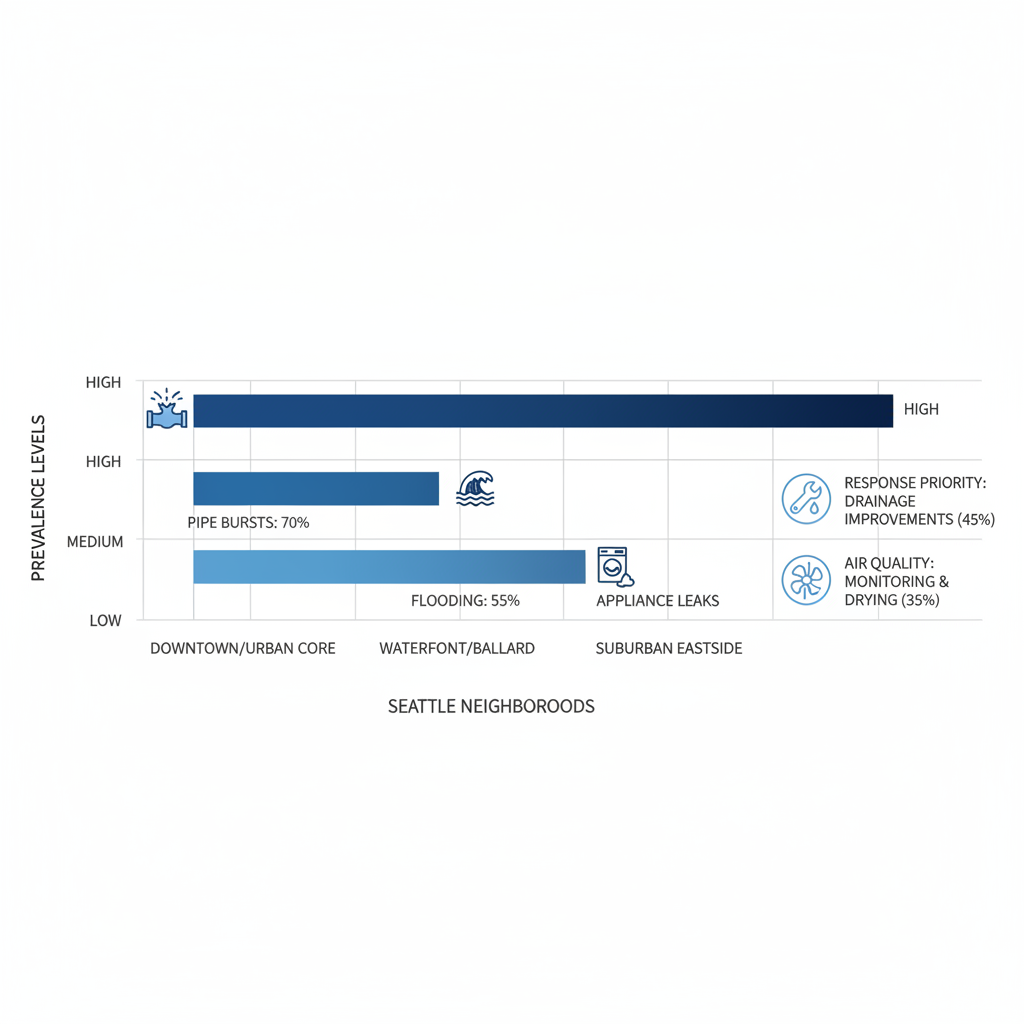
Water damage risks visualization by Seattle neighborhood
Preventing water damage in Seattle homes involves practical strategies like proper site grading and installing sump pumps to divert runoff. We’ve found that addressing drainage early reduces the need for extensive mold remediation in Seattle basements. For Seattle flood recovery, regular inspections and elevation adjustments in low areas prove effective, empowering proactive protection. Consult a licensed professional for a site inspection and estimate, as results may vary.
Accessible Restoration Services in Seattle
When facing water damage, residents and businesses in Seattle turn to comprehensive Water Damage Restoration in Seattle options that address immediate needs and long-term recovery. We offer a full suite of services tailored to the city’s unique challenges, including heavy rainfall and potential flooding from nearby waterways. Our approach ensures properties return to safe, sanitary conditions efficiently.
Core services include water extraction to remove standing water quickly, structural drying to prevent further damage, and sewage backup cleanup for contaminated environments. We also provide specialized flood damage restoration in Seattle, handling everything from basement inundations to widespread property impacts. Following water events, integrated mold remediation in Seattle is essential, where we follow EPA protocols for safe removal and prevention, citing guidelines for post-flood cleanup to maintain indoor air quality standards.
For mold removal Seattle, our local remediation experts deploy rapidly to assess and treat affected areas, adapting to the rainy season surges common in the region. These services cover the entire Seattle metro area, including suburbs like Bellevue and Kirkland, ensuring accessibility for all.
We prioritize rapid response with 24/7 availability, arriving on-site in under two hours for Seattle emergency water services. This swift action minimizes damage and supports reliable results.
Our team uses advanced equipment, such as industrial dehumidifiers and high-powered air movers, to accelerate drying processes. Results may vary, so we recommend consulting a licensed professional for a site inspection and estimate to determine the best path forward.
Seattle-Specific Restoration Factors
In Seattle’s rainy climate, water damage restoration requires attention to local factors like insurance nuances and building codes. We guide you through these complexities to ensure a smooth recovery process. Homeowners insurance typically covers sudden and accidental water damage, such as a burst pipe, but excludes gradual issues like chronic leaks. For Water Damage Restoration in Seattle, policies often align with Seattle insurance for water issues, requiring prompt claim filing. According to the FEMA fact sheet, document damage immediately and avoid unnecessary repairs until an adjuster assesses; this helped a Capitol Hill homeowner file a successful claim after a sudden flood.
Costs for restoration vary based on severity and location-specific requirements. Typical expenses range from $1,500 for minor leaks to $10,000 for extensive flood damage restoration in Seattle, influenced by our damp weather and strict building codes mandating reinforced drying techniques. For instance, basement flood cleanup Seattle often incurs higher fees due to moisture-trapped foundations. Factor in local humidity control to prevent escalation, and consult a licensed professional for a site inspection and estimate–results may vary.
Mold growth thrives in Seattle’s humid conditions post-water exposure, posing health risks if not addressed quickly. Effective prevention involves using dehumidifiers and improving ventilation during restoration. We recommend professional mold remediation in Seattle to remove spores safely, especially in basements, ensuring your home returns to a sanitary state with reliable results.
Steps to Initiate Restoration in Seattle
In Seattle’s rainy climate, swift action after water damage prevents escalation from urban flooding or pipe bursts. We recommend starting Seattle recovery immediately to minimize structural risks and health hazards. Our water cleanup Seattle services support this process with rapid response.
Here are the key steps for initiating Water Damage Restoration in Seattle:
- Secure the area and shut off utilities: Evacuate if necessary and turn off electricity and water to avoid hazards, as advised by FEMA’s fact sheet warning against immediate repairs without professionals. This initial local cleanup sets the foundation for safe access.
- Contact 24/7 services for assessment: Reach out to reliable teams offering 24/7 FREE quotes for a thorough evaluation, especially after storms common in Seattle.
- Document damage for insurance: Take photos and notes of the affected areas to support claims, helping estimate costs for flood damage restoration in Seattle.
- Begin extraction and drying: Professionals use advanced equipment for water removal and drying, addressing urgent flood-specific issues.
- Monitor for mold: Watch for growth in damp spaces and seek mold remediation in Seattle if needed to ensure a sanitary recovery.
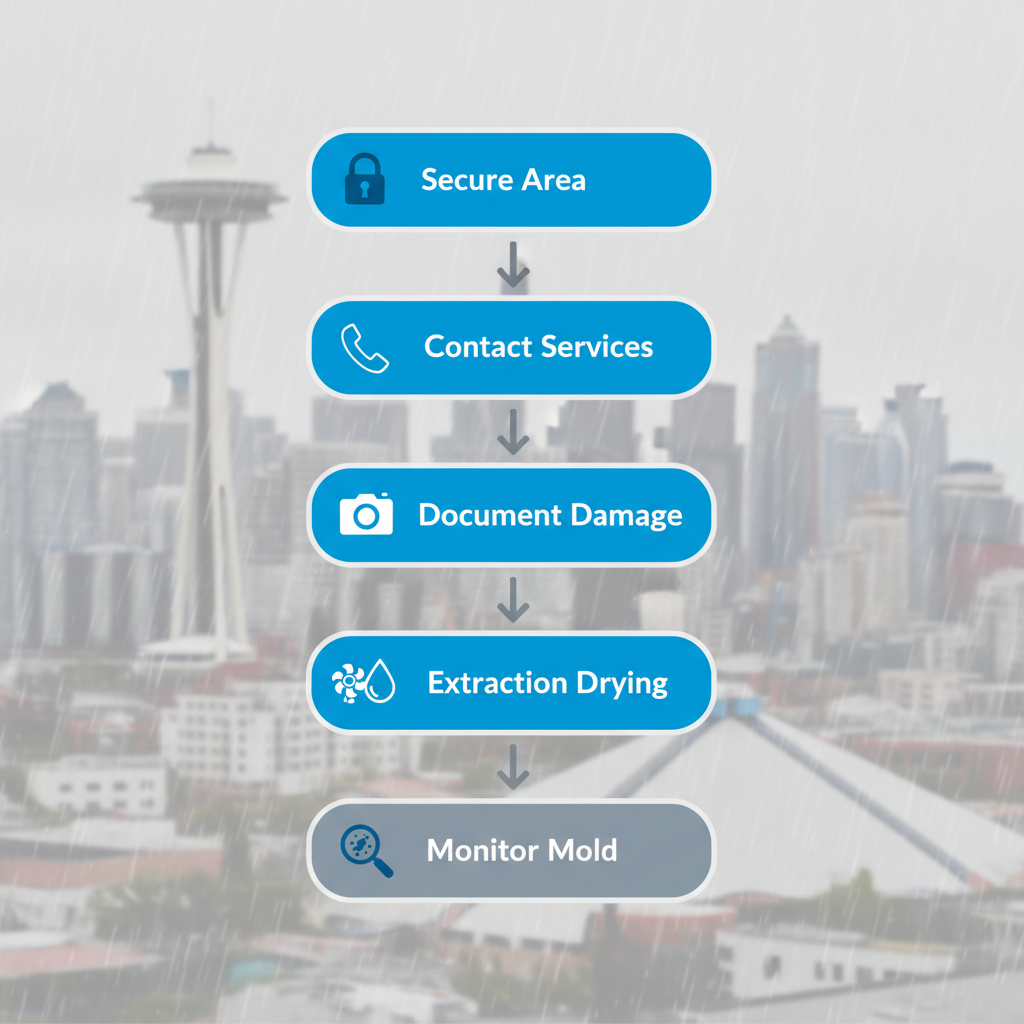
Five-step guide to starting water damage restoration in Seattle
To find reputable providers, check local reviews and verify IICRC certification. We prioritize reliable results through experienced technicians. Results may vary; consult a licensed professional for a site inspection and estimate.
Securing Your Seattle Property Post-Restoration
In conclusion, Water Damage Restoration in Seattle demands swift action to protect your property from floods and leaks. We provide 24/7 emergency services for rapid water extraction, flood damage restoration in Seattle, mold remediation in Seattle, and smoke damage restoration Seattle, ensuring safe recovery while navigating insurance claims efficiently.
For post-recovery maintenance, prioritize ongoing Seattle protection through regular inspections and air quality monitoring, as advised by EPA resources for flood cleanup. We’re here to support your resilience–stay prepared for Seattle’s challenges.
Resources

Seattle
WA
98116